Saturday, 1 November 2014

De Quincey and the Cursed Crocodile's Kisses

Dreams always baffle and interest us. They are products of our own minds, but products we do not ourselves form and therefore psychologists and laymen alike are drawn to make more or less inspired interpretations of them. To try to make sense of what is, in most cases, nonsensical mental frolicking is one way to approach dreams. Another one is to savour the liberation nonsense provides.

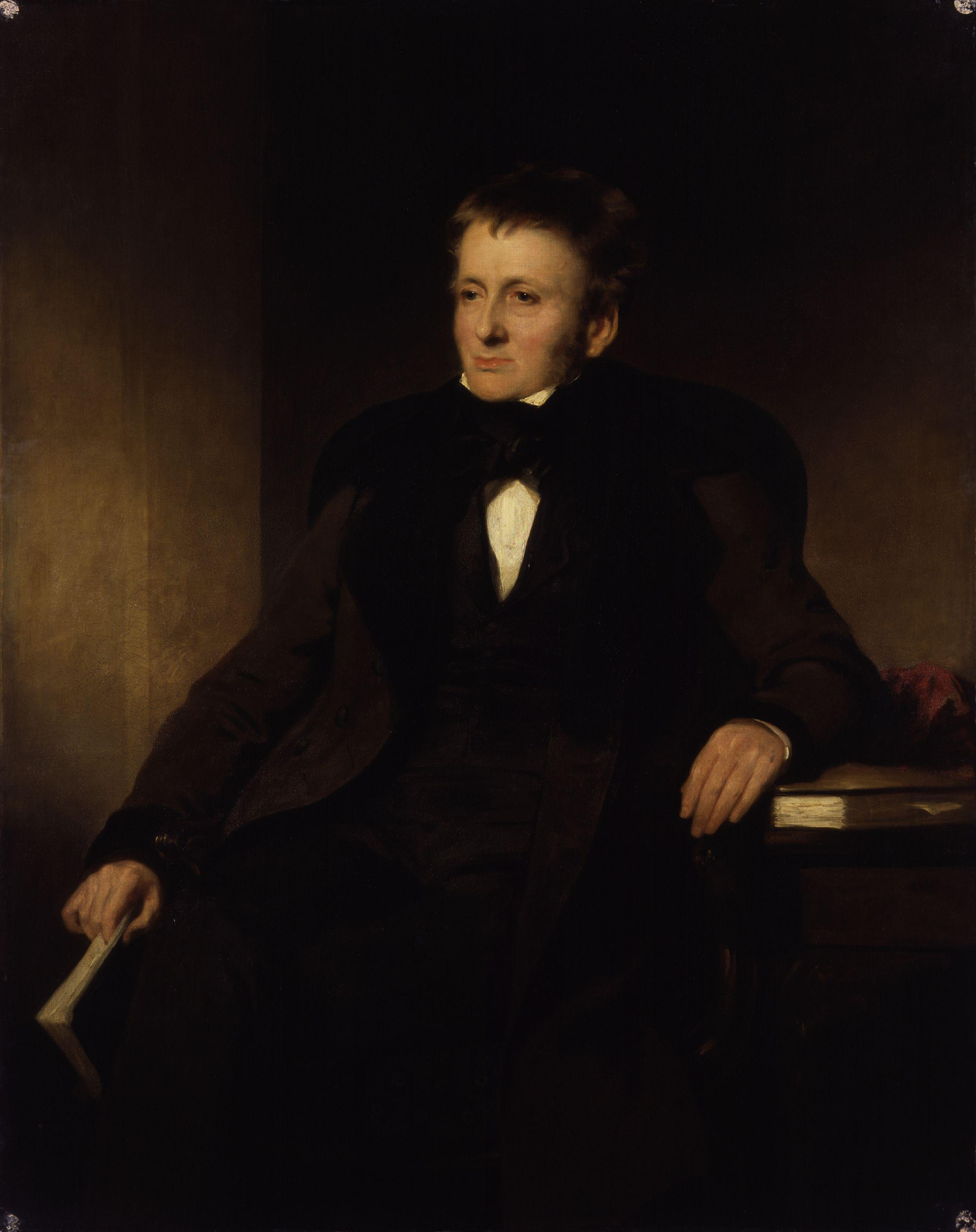
One who at least initially did so was the Romantic essayist and legendary druggie Thomas De Quincey. Author of "Confessions of an English Opium-Eater" (1821), one of the earliest specimen of addict literature, he was known to consume copious amounts of opium in laudanum form and wrote the book he is famous for partially to feed his drug habit. Despite this, with his Romantic colleagues died young; Keats from tuberculosis at 26, Shelley from drowning at 30 and Byron from a fever obtained while attempting to make himself king of Greece at 36, De Quincey died at 74 surrounded by his grandchildren. This is surprising, given his intake of drugs, described by himself thus:

my daily ration was eight thousand drops. If you write down that amount in the ordinary way as 8000, you see at a glance that you may read it into eight quantities of a thousand, or eight hundred quantities of ten, or lastly, into eighty quantities of one hundred. Now, a single quantity of one hundred will about fill a very old-fashioned obsolete teaspoon, of that order which you find still lingering amongst the respectable poor. Eighty such quantities, therefore, would have filled eighty of such antediluvian spoons — that is, it would have been the common hospital dose for three hundred and twenty adult patients (1).

This naturally gave him some fairly vivid nightmares and in the paragraphs below he tries to understand these, much like the novel in itself is an attempt to understand his addiction. Still, the colourful surrealism of his nightmares offers the liberation not having to understand, which is the essential liberation of sleep.

"

Thomas De Quincey
I remember about this time a little incident, which I mention because, trifling as it was, the reader will
soon meet it again in my dreams, which it influenced more fearfully than could be imagined. One day a Malay knocked at my door. What business a Malay could have to transact amongst English mountains I cannot conjecture; but possibly he was on his road to a seaport about forty miles distant. The servant who opened the door to him was a young girl, born and bred amongst the mountains, who had never seen an Asiatic dress of any sort; his turban therefore confounded her not a little; and as it turned out that his attainments in English were exactly of the same extent as hers in the Malay, there seemed to be an impassable gulf fixed between all communication of ideas, if either party had happened to possess any. In this dilemma, the girl, recollecting the reputed learning of her master (and doubtless giving me credit for a knowledge of all the languages of the earth besides perhaps a few of the lunar ones), came and gave me to understand that there was a sort of demon below, whom she clearly imagined that my art could exorcise from the house. I did not immediately go down, but when I did, the group which presented itself, arranged as it was by accident, though not very elaborate, took hold of my fancy and my eye in a way that none of the statuesque attitudes exhibited in the ballets at the Opera-house, though so ostentatiously complex, had ever done. In a cottage kitchen, but panelled on the wall with dark wood that from age and rubbing resembled oak, and looking more like a rustic hall of entrance than a kitchen, stood the Malay—his turban and loose trousers of dingy white relieved upon the dark panelling. He had placed himself nearer to the girl than she seemed to relish, though her native spirit of mountain intrepidity contended with the feeling of simple awe which her countenance expressed as she gazed upon the tiger-cat before her. And a more striking picture there could not be imagined than the beautiful English face of the girl, and its exquisite fairness, together with her erect and independent attitude, contrasted with the sallow and bilious skin of the Malay, enamelled or veneered with mahogany by marine air, his small, fierce, restless eyes, thin lips, slavish gestures and adorations. Half-hidden by the ferocious-looking Malay was a little child from a neighbouring cottage who had crept in after him, and was now in the act of reverting its head and gazing upwards at the turban and the fiery eyes beneath it, whilst with one hand he caught at the dress of the young woman for protection.

My knowledge of the Oriental tongues is not remarkably extensive, being indeed confined to two words—the Arabic word for barley and the Turkish for opium (madjoon), which I have learned from Anastasius; and as I had neither a Malay dictionary nor even Adelung’s Mithridates, which might have helped me to a few words, I addressed him in some lines from the Iliad, considering that, of such languages as I possessed, Greek, in point of longitude, came geographically nearest to an Oriental one. He worshipped me in a most devout manner, and replied in what I suppose was Malay. In this way I saved my reputation with my neighbours, for the Malay had no means of betraying the secret. He lay down upon the floor for about an hour, and then pursued his journey. On his departure I presented him with a piece of opium. To him, as an Orientalist, I concluded that opium must be familiar; and the expression of his face convinced me that it was. Nevertheless, I was struck with some little consternation when I saw him suddenly raise his hand to his mouth, and, to use the schoolboy phrase, bolt the whole, divided into three pieces, at one mouthful. The quantity was enough to kill three dragoons and their horses, and I felt some alarm for the poor creature; but what could be done? I had given him the opium in compassion for his solitary life, on recollecting that if he had travelled on foot from London it must be nearly three weeks since he could have exchanged a thought with any human being. I could not think of violating the laws of hospitality by having him seized and drenched with an emetic, and thus frightening him into a notion that we were going to sacrifice him to some English idol. No: there was clearly no help for it. He took his leave, and for some days I felt anxious, but as I never heard of any Malay being found dead, I became convinced that he was used to opium; and that I must have done him the service I designed by giving him one night of respite from the pains of wandering.

This incident I have digressed to mention, because this Malay (partly from the picturesque exhibition he assisted to frame, partly from the anxiety I connected with his image for some days) fastened afterwards upon my dreams, and brought other Malays with him, worse than himself, that ran “a-muck” at me, and led me into a world of troubles (2).

"
"

The sublime circumstance, “battlements that on their restless fronts bore stars,” might have been copied from my architectural dreams, for it often occurred. We hear it reported of Dryden and of Fuseli, in modern times, that they thought proper to eat raw meat for the sake of obtaining splendid dreams: how much better for such a purpose to have eaten opium, which yet I do not remember that any poet is recorded to have done, except the dramatist Shadwell; and in ancient days Homer is I think rightly reputed to have known the virtues of opium.

Cover of the 2nd Edition
To my architecture succeeded dreams of lakes and silvery expanses of water: these haunted me so much that I feared (though possibly it will appear ludicrous to a medical man) that some dropsical state or tendency of the brain might thus be making itself (to use a metaphysical word) objective; and the sentient organ project itself as its own object. For two months I suffered greatly in my head, a part of my bodily structure which had hitherto been so clear from all touch or taint of weakness (physically I mean) that I used to say of it, as the last Lord Orford said of his stomach, that it seemed likely to survive the rest of my person. Till now I had never felt a headache even, or any the slightest pain, except rheumatic pains caused by my own folly. However, I got over this attack, though it must have been verging on something very dangerous.

The waters gradually changed their character—from translucent lakes shining like mirrors they now became seas and oceans. And now came a tremendous change, which, unfolding itself slowly like a scroll through many months, promised an abiding torment; and in fact it never left me until the winding up of my case. Hitherto the human face had mixed often in my dreams, but not despotically nor with any special power of tormenting. But now that which I have called the tyranny of the human face began to unfold itself. Perhaps some part of my London life might be answerable for this. Be that as it may, now it was that upon the rocking waters of the ocean the human face began to appear; the sea appeared paved with innumerable faces upturned to the heavens—faces imploring, wrathful, despairing, surged upwards by thousands, by myriads, by generations, by centuries: my agitation was infinite; my mind tossed and surged with the ocean.

May 1818
The Malay has been a fearful enemy for months. I have been every night, through his means, transported into Asiatic scenes. I know not whether others share in my feelings on this point; but I have often thought that if I were compelled to forego England, and to live in China, and among Chinese manners and modes of life and scenery, I should go mad. The causes of my horror lie deep, and some of them must be common to others. Southern Asia in general is the seat of awful images and associations. As the cradle of the human race, it would alone have a dim and reverential feeling connected with it. But there are other reasons. No man can pretend that the wild, barbarous, and capricious superstitions of Africa, or of savage tribes elsewhere, affect him in the way that he is affected by the ancient, monumental, cruel, and elaborate religions of Indostan. The mere antiquity of Asiatic things, of their institutions, histories, modes of faith, etc., is so impressive, that to me the vast age of the race and name overpowers the sense of youth in the individual. A young Chinese seems to me an antediluvian man renewed. Even Englishmen, though not bred in any knowledge of such institutions, cannot but shudder at the mystic sublimity of castes that have flowed apart, and refused to mix, through such immemorial tracts of time; nor can any man fail to be awed by the names of the Ganges or the Euphrates. It contributes much to these feelings that southern Asia is, and has been for thousands of years, the part of the earth most swarming with human life, the great officina gentium. Man is a weed in those regions. The vast empires also in which the enormous population of Asia has always been cast, give a further sublimity to the feelings associated with all Oriental names or images. In China, over and above what it has in common with the rest of southern Asia, I am terrified by the modes of life, by the manners, and the barrier of utter abhorrence and want of sympathy placed between us by feelings deeper than I can analyse. I could sooner live with lunatics or brute animals. All this, and much more than I can say or have time to say, the reader must enter into before he can comprehend the unimaginable horror which these dreams of Oriental imagery and mythological tortures impressed upon me. Under the connecting feeling of tropical heat and vertical sunlights I brought together all creatures, birds, beasts, reptiles, all trees and plants, usages and appearances, that are found in all tropical regions, and assembled them together in China or Indostan. From kindred feelings, I soon brought Egypt and all her gods under the same law. I was stared at, hooted at, grinned at, chattered at, by monkeys, by parroquets, by cockatoos. I ran into pagodas, and was fixed for centuries at the summit or in secret rooms: I was the idol; I was the priest; I was worshipped; I was sacrificed. I fled from the wrath of Brama through all the forests of Asia: Vishnu hated me: Seeva laid wait for me. I came suddenly upon Isis and Osiris: I had done a deed, they said, which the ibis and the crocodile trembled at. I was buried for a thousand years in stone coffins, with mummies and sphynxes, in narrow chambers at the heart of eternal pyramids. I was kissed, with cancerous kisses, by crocodiles; and laid, confounded with all unutterable slimy things, amongst reeds and Nilotic mud.

I thus give the reader some slight abstraction of my Oriental dreams, which always filled me with such amazement at the monstrous scenery that horror seemed absorbed for a while in sheer astonishment. Sooner or later came a reflux of feeling that swallowed up the astonishment, and left me not so much in terror as in hatred and abomination of what I saw. Over every form, and threat, and punishment, and dim sightless incarceration, brooded a sense of eternity and infinity that drove me into an oppression as of madness. Into these dreams only it was, with one or two slight exceptions, that any circumstances of physical horror entered. All before had been moral and spiritual terrors. But here the main agents were ugly birds, or snakes, or crocodiles; especially the last. The cursed crocodile became to me the object of more horror than almost all the rest. I was compelled to live with him, and (as was always the case almost in my dreams) for centuries. I escaped sometimes, and found myself in Chinese houses, with cane tables etc.. All the feet of the tables, sofas, etc. soon became instinct with life: the abominable head of the crocodile, and his leering eyes, looked out at me, multiplied into a thousand repetitions; and I stood loathing and fascinated. And so often did this hideous reptile haunt my dreams that many times the very same dream was broken up in the very same way: I heard gentle voices speaking to me (I hear everything when I am sleeping), and instantly I awoke. It was broad noon, and my children were standing, hand in hand, at my bedside—come to show me their coloured shoes, or new frocks, or to let me see them dressed for going out. I protest that so awful was the transition from the damned crocodile, and the other unutterable monsters and abortions of my dreams, to the sight of innocent human natures and of infancy, that in the mighty and sudden revulsion of mind I wept, and could not forbear it, as I kissed their faces (3).

"

Bonus fact: Just prior to the last segment, De Quincey recalls Samuel Taylor Coleridge, another famous Romantic junkie, describing some plates by the Italian artist Giovanni Battista Piranesi. These, he finds gives a good pictorial expression to his initial, drug-induced nightmares, although he mistakes the title of the collection, "Imaginary Prisons", as "Dreams". Published from 1750 to 1761, the capricci, which is the art term used for fanciful exaggerations, would later inspire Romantic and Surrealist art and bears an uncanny resemblance to Escher for modern viewers. Piranesi, therefore provides the link between De Quincey's delirium and the Surrealism movement.

The "Imaginary Prisons" can be seen here. My earlier post on David Mitchell's and Kurt Vonnegut's take on addiction can be accessed here.

Sources: De Quincey, Thomas: Confessions of an English Opium-Eater, London 2009, (1) 169, (2) 160-162, (3) 190-192, Pic1, Pic2

Tuesday, 16 September 2014

Perfecly Golden, Wodehouse - Service with a Smile

Welcome to the belated third bulletin in the series "Perfectly Golden, Wodehouse"! As the the bees are buzzing in the bushes going about their summerly business with a gusto, one cannot but be inspired and therefore steps onto the podium like the heralds of yore. The previous compilations of Wodehousean splendor consisted of delectable morsels out of Carry on, Jeeves and Very Good, Jeeves (with an additional little topical collage in 2011) and not even your severest critic would look at you askance for revisiting them. However, one must keep a stern focus on the task at hand, and so, with the determination of MacIntosh the dog or that Duch fellow with the boat, I will plunge into the sunlit expanses of Blandings Castle and the


Third book:
Service with a Smile
First published 1961
(ed. published 2008 by
Arrow Books, London)

"'South Kensington? Where sin stalks naked throught the dark alleys and only might is right. Give this man a miss. He'll lead you astray.'" (p.28)

"Some twenty muinutes had elapsed, and there were still no signs of the bride-to-be, and nothing so surely saps the morale of a bridegroom on this wedding day as the failure of the party of the second part to put in an appearance at the tryst. [...] Lord Ickenham tried to comfort him with the quite erroneous statement that it was early yet." (p.33)

"Going by the form book, he took it for granted that ere many suns had set the old buster would be up to some kind of hell which would ultimately stagger civilization and turn the moon to blood, but what mattered was that he would be up to it a t Lord Emsworth's rural seat and not in London." (p.47)

"'Nervous, Bill?' he said, regarding the Rev Cuthbert sympathetically. He had seemed to nitice during the early stages of the journey a tendency on the other's part to twitch like a galvanized frog and allow a sort of glaze to creep over his eyes." (p.48)

"'I happened to be doing some visiting there for a pal of mine who had sprained an ancle while trying to teach the choir boys to dance the carioca, and I came along just as someone was snatching her bag. So, of course, I biffed the blighter.'
'Where did they bury the unfortunate man?'
'Oh, I didn't biff him much, just enough to make him see how wrong it is to snatch bags'" (p.50)

"'I always strive, when I can, to spread sweetness and light. There have been several complaints about it.'" (p.62)

Lord Emsworth had been subjected to a cruel trick by the Church Lads Brigade, camping out in his grounds under his sister Connie's protection and consults Ickenham on the subject of retaliation: 
"'Ah, that wants thinking over, doesn't it? I'll devote earnest thought to the matter, and if anything occurs to me, I'll let you know. You wouldn't consider mowing them down with a shotgun?'
'Eh? No, I doubt if that would be advisable.'
'Might cause remark, you feel?' said Lord Ickenham. 'Perhaps you're right. Never mind. I'll think of something else.'" (p.67)

The dastardly Duke of Dunstable covets the Empress of Blandings, that magnificent, prize-winning Berkshire pig of Emsworth's:
"'I've asked him a dozen times. 'I'll give you five hundred pounds cash down for that bulbous mass of lard and snuffle,' I said to him. 'Say the word,' I said, 'and I'll have the revolting object shipped off right away to my place in Wiltshire, paying all the expenses of removal.' He refused, and was offensive about it, too. The man's besotted.'" (p.72)

"'[You would buy the Empress] Just to do Clarance good?' she said, amazed. She had not credited her guest with this atruism.
'Certainly not,' said the Duke, offended that he should be supposed capable of such a motive." (p.73)

"Prefacing her remarks with the statement that if girls like Lavender Briggs were skinned alive and dipped in boiling oil, this would be a better and sweeter world, Myra embarked on her narrative." (p.94)

According to Ickenham, breaking off an engagement is the easiest thing in the world:
"'You're strolling with him in the moonlight. He says something about how jolly it's going to be when you and he are settled down in your little nest, and you say, 'Oh, I forgot to tell you about that. It's off.' He says, 'What!' You say, 'You heard,' and he reddens and goes to Africa.'" (p.138)

"In the life of every successful man there is always some little something missing. Lord Tilbury had wealth and power and the comforting knowledge that, catering as he did for readers who had all been mentally arrested at the age of twelve, he would continue to enjoy these indefinitely" (p.140)

"He mistrusted these newspaper fellers. You told them something in the strictest confidence, and the next thing you knew it was spread all over the gossip page with a six-inch headline at the top and probably a photograph of you, looking like somepne the police were anxious to question in connextion with the Dover Street smash-and-grab raid." (p.147)

"Once more, Archie Gilpin ran a hand through his hair. The impression he conveyed was that if the vultures gnawing at his bosom did not shortly change their act, he would begin pulling it out in handfuls." (p.162)

"Seated on the stile, hist deportment was rather like that of a young Hindu fakir lying for the first time on the traditional bed of spikes, Archie Gilpin seemed still to find a difficulty clothing his thoughts in words." (p. 163)

"Archie nodded. He had never blinded himself to the fact that anyone trying to separate cash from the Duke of Dunstable was in much the same position as a man endeavouring to take a bone from a short-tempered wolf-hound." (p. 168)

"'Are you there, Stinker?'
If the Duke had not been a little deaf in the right ear, he might have heard a sound like an inexperienced motorist chaning gears in an old-fashioned car. It was the proprietor of the Mammoth Publishing Company grinding his teeth. Sometimes, when we hear a familiar voice, the heart leaps up like that of the poet Wordsworth when he beheld a rainbow in the sky. Lord Tilbury's was far from doing this." (p.170)

"[Lord Tilbury] proceeded to answer in the negative. This took some time for in addition to saying 'No' he had to tell the Duke what he thought of him, indicating one by one the various points on which his character diverged from that of the ideal man." (p.171)

"'Well, well!' said Mr Schoonmaker.
'Well, well, well!' said Lord Ickenham.
'Well, well, well, well!' said Mr Schoonmaker.
Lord Emsworth interrupted the reunion before it could reach the height of its fever." (p.179)

Mr Schoonmaker has difficulties mustering the courage to propose to Constance Keeble:
"'When I try to propose to her, the words won't come. It's happened a dozen times. The sight of that calm aristocratic profile wipes them from my lips.'
'Try not looking at her sidways'" (p.184)

The Duke of Dunstable on his favourite theme:
"'Hasn't he got any? You told me he came from Brazil. Fellers make money in Brazil.'
'He didn't. A wasting sickness struck the Brazil nuts, and he lost all his capital.'
'Silly ass.'
'Your sympathy does you credit. Yes, his lack of money is the trouble.'" (p.202)

"'You know and I know that Dunstable is a man who sticks at nothing and would walk ten miles in the snow to chisel a starevng orphan out of tuppence'" (p.210)

"'Should I escort you there, sir?'
'No, don't bother. I'll find it. Oh, Beach?'
'Sir?'
'Here,' said Mr Schoonmaker, and thrusting a piece of paper into the butler's hand he curvetted off like, thought Beach, an unusually extrovert lamb in springtime.
Beach looked at the paper, and being alone, with nobody to report him to his guild, permitted himself a sharp gasp. It was a ten-pound note" (p.212)

"Mr Schoonmaker, meanwhile, touching the ground only at odd spots, had arrived at Lavender Briggs' office ...[and was] pacing the floor in a manner popularized by tigers at a zoo" (p. 213-214)

"The Duke, who had been scowling at the typewriter, as if daring it to start something, became more composed. A curious gurgling noise suggested that he had chuckled" (p.219)

Saturday, 26 July 2014

Romeo and Juliet Must Die

Have you ever wondered why all the romantic stories end when one part gets the other? Romeo and Juliet meet each other, marry and then promptly die. Elizabeth Bennet pairs up with Mr. Darcy and the story is at an end. The fairy tale princess marries the fairy tale prince effectively terminating the fairy tale with a flimsy assurance that their marriage is to be a long and happy one.

A familiar fate

Any author or literature specialist will tell you that with the establishment of the protagonists as a romantic unit the initial conflict is resolved. This is the conflict that drives the plot and creates a lack both protagonists more or less actively seek to fill, and their union rounds off the plot by halting its driving force. More on this below, but in the meantime, there is another theory of why the fate of all couples is this way.

The O(o)ther

Jacques Lacan, the French psychoanalyst, launched his theory of "the other". This was an ontological aspect of the self, an idealised exterior part of what each individual considers to be his essence. While the Lithuanian-French philosopher Emmanuel Levinas focused perhaps more on the social and ethical nature of the other, Lacan’s focus on language makes his thinking especially relevant for the literary Other.

Jacques Lacan

He distinguishes between the little other (the “other”) and the big other (the “Other”). The first is not really someone else, but a projection of the self onto someone or something else, so when Catherine in Wuthering Heights says about Heathcliffe that He’s more myself than I am. Whatever our souls are made of, his and mine are the same, she is talking of the little other. On the other side, there is the big other, which is radically different, a clear and distinct alternative to the self. In literature, there is arguably a graded scale of otherness, but where for instance Heathcliffe and Catherine are similar in nature, Elizabeth Bennet and Fitzwilliam Darcy are quite dissimilar. For Elizabeth, then, Darcy is the Other whom she needs to relate to.

This is where Lacan argues that language, the system by which we understand everything and conceptualise the world, originates in the Other, rather than the self. It is by relating to the clearly different Other that language originates, and so language development is beyond the individual’s control, or as Lacan puts it: the unconscious is the discourse of the Other.

Bringing it back to the concept of love in literature, since the system of language is created by the Other, the concepts understood through this system follow a similar progress, including love. It is by relating to the Other, Romeo to Juliet, Elizabeth to Darcy, Catherine to Heathcliffe or vice versa that the characters can understand love and each other.

Three couples from literature: Romeo and Juliet,
  Elizabeth and Darcy and Catherine and Heathcliffe

If by now you are a bit confused by the haphazard use of the Other and the other, that is understandable, but let me tidy the conceptual area up for you. Previously, I boldly stated that in literature, there is a graded scale between the Other and the other. Romeo is the other to Juliet in the sense that they are both young aristocrats grappling with many of the same problems and desires. Juliet understands her own feelings and fears by recognising them in Romeo. At the same time, Romeo is Other. He belongs to a different familial tradition with different, conflicting interests to that of Juliet’s family. In order for their relationship to work, Romeo needs to advance from Juliet’s Other to Juliet’s other, and to do so, Juliet needs to conceptualise and understand her love for Romeo.

The same progress will, of course, have to be performed by Romeo with Juliet and the area in which this happens is in that literary graded zone between the Other and the other. Once the process is completed successfully, and both parts are the other to each other, they have formed a new unit in the other, as complete projections of their selves. It is when this stage is reached in literature that the narrative will have to end, because no more of the progress of the main characters is possible. Further narrative requires another Other, with implications for the story which are interesting, but far too wide to address here.

Furthermore, as the psychological progress from the Other to the other mirrors the narrative’s progress from exposition to conclusion, the elements of the Other that needs to be overcome in the process reflects the conflict in the narrative.

You see, here we have returned to the conflict as promised.

Conflict

Already the ancient Greeks were familiar with what they called agon, an identifiable element that initiates and propels the plot forward. Later literary studies have identified explored and expanded on this concept of conflict by diversifying into a range of categories like “man vs. man”, “man vs. society”, “man vs. nature” and “man vs. self”. In this way, Doyle’s Sherlock Holmes grapples with Moriarty, Orwell’s Winston Smith opposes Big Brother, London’s Buck and White Fang have to come to terms with nature, external and internal and Beckett’s Krapp, Wilde’s Dorian Gray and Palahnuik’s Fight Club protagonist all spend the span of the plot consciously or unconsciously dealing with some aspect of their own character.

Two antagonistic sources of conflict; Professor Moriarty
and Big Brother/The society in Nineteen Eighty-four

Depending on how you define the different sides of the conflict, several of these categories can play a role. The hindrance for Romeo or Juliet and the progress from Other to other is both actual antagonists (relatives), society (one organised around the family unit and its values), nature (in the sense of their own sexuality) and self (their perception of their own individuality and identity).

While this bears witness to the fluid nature of conflict in literature, it nevertheless underlines how essential it is. Even when conflict remains unresolved at the end, when the complexity of the conflict is a central theme or when the narrative challenges the reader to make his own conclusions, the conflict is present from the exposition on. Just look at any part of Joyce’s Dubliners, which is riddled with different conflicts but painfully void of resolution.

Happily Ever After

This, however is not the case in most of the romantic stories of literature. Once the lovers are together (or irretrievably lost to each other, which is the same), the conflict is resolved, the Other has become the other and the plot is at an end. There are only two alternatives to this. The first one involves an open ending. Romeo enters the church and sees Juliet and the plot ends there.

The second is that most dreaded of cultural items; the sequel. In this, “Romeo and Juliet 2 – Vampires of Verona” or “Pride and Prejudice – Meet the Darcys”, a new conflict and possibly a new or different set of characters (“Romeo and Juliet 2 – Mercutio the Merciless”) need to be introduced.

In any case, the main characters of the original have overcome the conflict and effectively ended the plot. Romeo and Juliet are one in death and so are Heathcliffe and Catherine. The Darcys, and hopefully many others of your favourite literary characters, do like in the fairy tales and live happily ever after.

of the conflict and the fun

What do you think?

Is this theory correct? Are all love stories doomed to end as soon as love blossoms, and how does this make you feel about your own relationships? I have used the theories of psychoanalysis on literature, can these theories on literature be used on real life social relationships?


Comments on The Tale of Sir Bob are always welcome! 

Sources: as given

Friday, 25 October 2013

David Mitchell and Kurt Vonnegut on Addiction

We all have our addictions, some more persistent than others. Mine is an endless string of "complete works of..."s. Luckily though, authors die leaving me with serious withdrawal symptoms and the methadon of mediocre spin-offs and copycats.

One of this addictions is the writings of Kurt Vonnegut. (To be fair, it's really the narration of Kurt Vonnegut: one so compelling you find yourself nodding while reading). Sadly, though, Kurt Vonnegut died. He was planning to use his addiction to tobacco as a "classy way to commit suicide", but fell down his stairs before his addiction could get the better of him. 

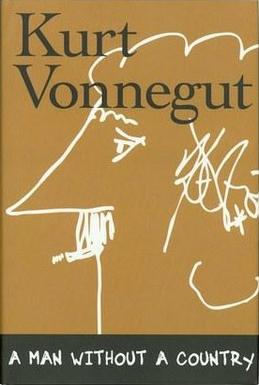
Before this though, he had a collection of his essays published in A Man Without a Country. This is one of the few books I've consumed in under a day, in a secluded, vacant room on a slow cruise to which I was considerably less partial than to Vonnegut's laconic tone. In it, he presents an alternative understanding of addiction.


This little text was what caused a exquisite relapse in my literary five step program of recovery. I was suffering in silence, struggling through the nonentity Gentlemen of the Road by Michael Chabon, an author whose prowess had been extolled to me by a patently misguided Canadian girl in a Paris cafĂ©, when in an effort to end the doldrums I read an article by David Mitchell in the Guardian. 

In it, he commented on revelations that an actress had tried drugs in the 70s, arguing that while this shouldn't really surprise anyone, the fact that she clearly didn't sustain any lasting addiction or harm from it caused some issues for anti-drugs campaigns. Lamenting never having been offered cocaine himself (so that he could vehemently refuse), Mitchell reached the nub of his argument, that most anti-drug campaigns, including those against tobacco and alcohol, focus on the wrong thing. 

This was when Mitchell and Vonnegut's shared trait of narrative persuasiveness and topic made a rereading of A Man Without a Country reappear to this listless reader as a beacon of light, an oasis in the desert or some such thing. 

Hopefully, the intellectual gymnastics in these excerpts will allow you to think about communication, addiction and yourself in a new way. Also, if you, like me, appreciate the wit of these two, you would read both Vonnegut's essay and Mitchell's article in full, or even read through A Man Without a Country and watch the episodes of David Mitchell's Soap Box.

But not until you have enjoyed these excerpts:

"

Kurt Vonnegut,
army portrait

I'm going to tell you some news.
 
No, I am not running for President, although I do know that a sentence, if it is to be complete, must have both a subject and a verb.
 
Nor will I confess that I sleep with children. I will say this, though: My wife is by far the oldest person I ever slept with.
 
Here's the news: I am going to sue the Brown & Williamson Tobacco Company, manufacturers of Pall Mall cigarettes, for a billion bucks! Starting when I was only 12 years old, I have never chain-smoked anything but unfiltered Pall Malls. And for many years now, right on the package, Brown and Williamson have promised to kill me.
 
But I am now 82. Thanks a lot, you dirty rats. The last thing I ever wanted was to be alive when the three most powerful people on the whole planet would be named Bush, Dick and Colon.
 
Our government's got a war on drugs. That's certainly a lot better than no drugs at all. That's what was said about prohibition. Do you realise that from 1919 to 1933 it was absolutely against the law to manufacture, transport, or sell alcoholic beverages, and the Indiana newspaper humourist Ken Hubbard said: "Prohibition is better than no liquor at all."
 
But get this: The two most widely abused and addictive and destructive of all substances are both perfectly legal.
 
One, of course, is ethyl alcohol. And President George W Bush, no less, and by his own admission, was smashed, or tiddley-poo, or four sheets to the wind a good deal of the time from when he was 16 until he was 40. When he was 41, he says, Jesus appeared to him and made him knock off the sauce, stop gargling nose paint.
 
Other drunks have seen pink elephants.
 
About my own history of foreign substance abuse, I've been a coward about heroin and cocaine, LSD and so on, afraid they might put me over the edge. I did smoke a joint of marijuana one time with Jerry Garcia and the Grateful Dead, just to be sociable. It didn't seem to do anything to me one way or the other, so I never did it again. And by the grace of God, or whatever, I am not an alcoholic, largely a matter of genes. I take a couple of drinks now and then and will do it again tonight. But two is my limit. No problem.
 
I am, of course, notoriously hooked on cigarettes. I keep hoping the things will kill me. A fire at one end and a fool at the other.
 
But I'll tell you one thing: I once had a high that not even crack cocaine could match. That was when I got my first driver's licence ­ look out, world, here comes Kurt Vonnegut!
 
And my car back then, a Studebaker as I recall, was powered, as are almost all means of transportation and other machinery today, and electric power plants and furnaces, by the most abused, addictive, and destructive drugs of all: fossil fuels.
 
When you got here, even when I got here, the industrialised world was already hopelessly hooked on fossil fuels, and very soon now there won't be any left. Cold turkey.
 
Can I tell you the truth? I mean this isn't the TV news is it? Here's what I think the truth is: We are all addicts of fossil fuels in a state of denial. And like so many addicts about to face cold turkey, our leaders are now committing violent crimes to get what little is left of what we're hooked on.

"

David Mitchell

If I tried cocaine, the worst outcome would be that I liked it and the best that I didn't. When not liking something is the most you can hope for from consuming it, that's a good reason to abstain. 

Do you like my logic? I was pleased with it and looked forward to delivering it to the twat I imagined offering me a 'line' (I lack the confidence to type that without inverted commas) at a party. But not once have I been given the chance! Clearly, I come across as too square even to be worth attempting to corrupt. I'm just not cool.

'Cool' is the key to all this. That's why the celebs are happy to make their admissions. They're boasting that they were the kind of people who were cool enough to be approached, to get involved, to try stuff. They were creative and experimental and dangerously unwise and there's no one alive who, at some point, didn't want to seem like that. Except maybe Ann Widdecombe. 

This is also the problem with anti-smoking campaigns. They persist in trying to persuade kids that smoking isn't cool. Come off it. Look at Sean Connery as James Bond or Béatrice Dalle in Betty Blue. We're trying to stop millions of young people from doing something that may kill them and we kick off with a demonstrable lie.

Smoking is cool. Addiction isn't (people huddling outside offices in the rain don't look cool so much as cold) and cancer certainly isn't, but smoking when isolated from these things obviously is. No, there's a harder but ultimately more persuasive message we need to find some way to convey: being cool doesn't really matter. We shouldn't let 'cool' become a direct synonym of 'good'.

The problem is that to the marketing and advertising companies this is heresy. Invoking 'cool' is how you make people do things they otherwise wouldn't: buy electric shavers that jizz moisturiser, endlessly drink mini-yogurts, douse themselves in a smell Kate Moss has reportedly made. Cool is why they're smoking, so it must be why they'll stop.

We'll never stop the young from wanting to be cool and it's worth promoting uncarcinogenic ways they can do this. But we might as well spend some time trying to undermine being cool as an aim, rather than pretending we know better than them what constitutes it.

It irritates me when teenagers in bad dramas or adverts say things such as: 'Your mum's cool' to mean: 'I like your mum.' The correct response should be: 'No, my mum is not cool - she doesn't wear sunglasses indoors or weird clothes. She is a middle-aged woman who is nice and good and wise and worrying about what's cool is beneath her.'

Unfortunately the reply to this would inevitably be: 'Cool!'

"

What do you think?

Is David Mitchell right in indicating that anti-smoking campaigns target the wrong problem, smoking and not addiction? Is this the position he is arguing? Does his attention to the word "cool" sit well with you in this context?


Vonnegut's argument can in some way be seen as contrary to that of Mitchell. Where Mitchell claims out understanding of addiction is too vague and covers too much, Vonnegut claims it's too definite and restrictive. Is he right when he points out that fossil fuels are our most threatening addiction? Are there other, more dagerous ones he does not mention?

Comments on The Tale of Sir Bob are always welcome! 


Sources: Text1Text2, Pic1, Pic2Pic3

Friday, 4 October 2013

The Pope's Erotic Novel

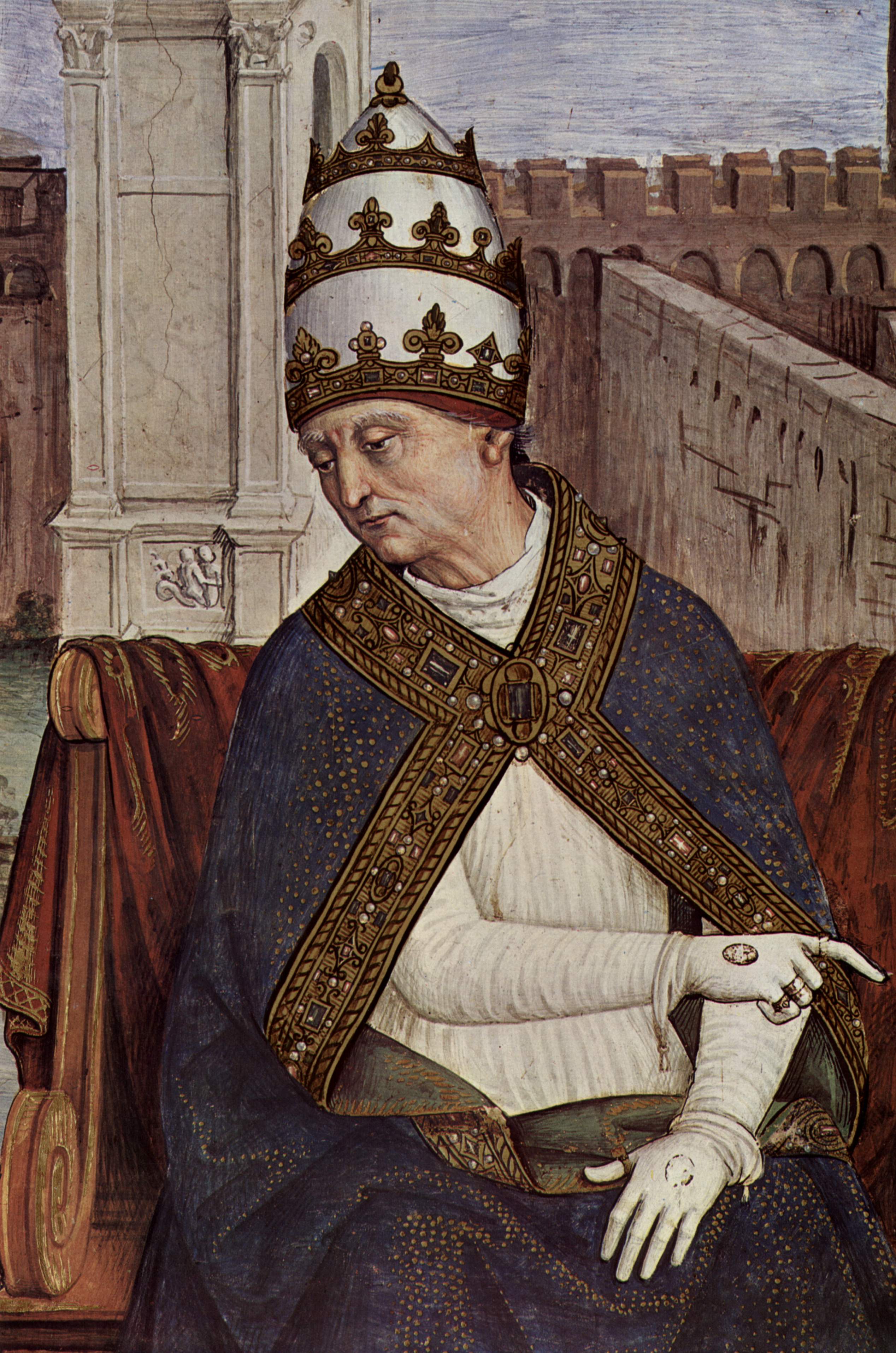
One of the most popular books of the 15th century was the Historia de duobus amantibus or the Story of two lovers, written by Enea Silvio Piccolomini from Siena in 1444. It was first published in Cologne in 1468 and then in Rome in 1476, whereupon it followed a meteoric increase in publication. One reason for its popularity could be that it is one of the first notable erotic novels, only preceded by Petronius Arbiter's Satyricon and Boccaccio's Decameron, and the first epistolary erotic novel. Another reason could be that Piccolomini went on to become Pope Pius II in 1458.

Piccolomini in his older, more frumpy times

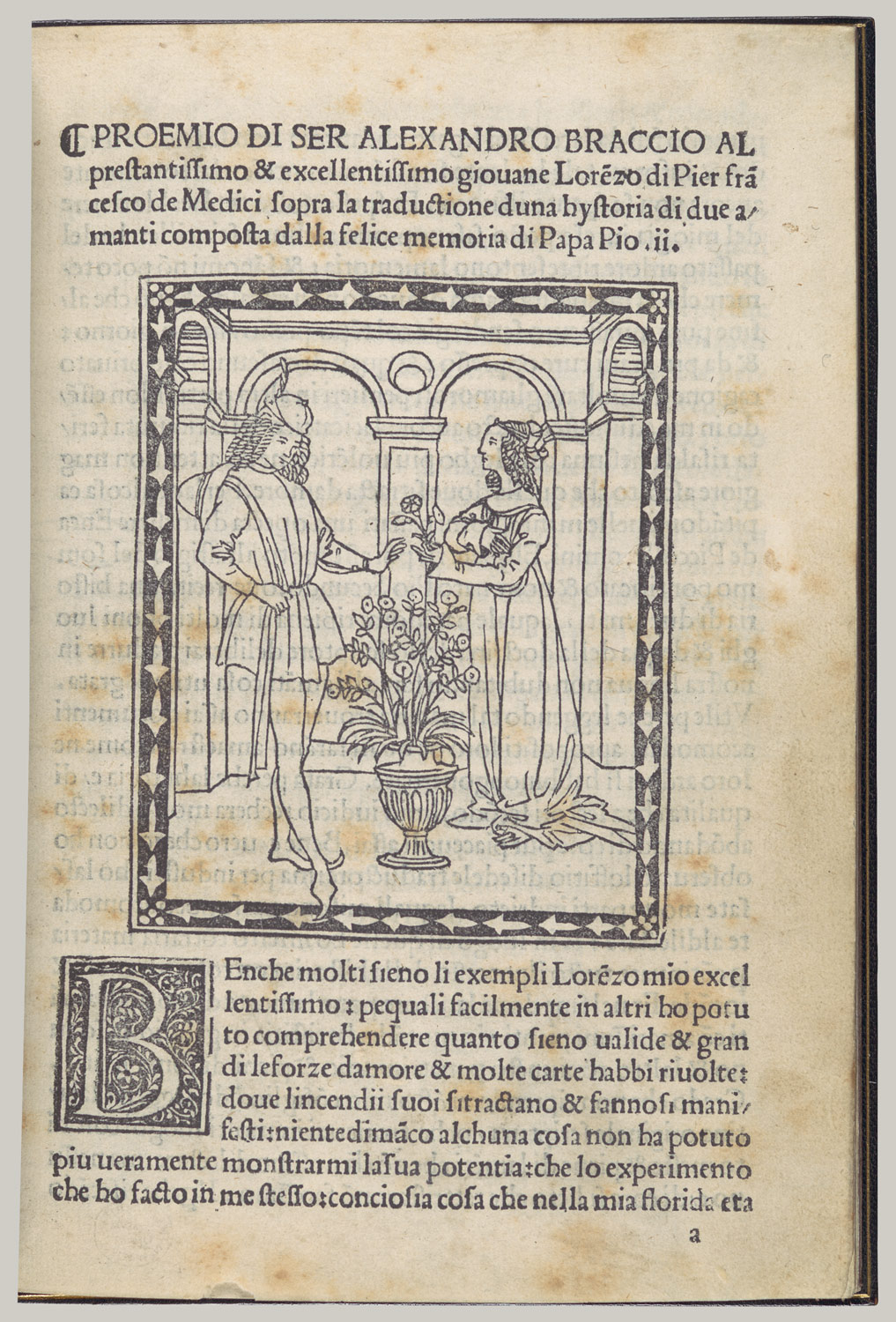
The novel follows the adulterous love of Lucretia, a married woman in Piccolomini's native Siena, and Euryalus, companion of Sigismund, the visiting Duke of Austria. Their relationship progresses from the search for reciprocal affection following a chance meeting, through love letters and secret meetings to a tragic finale. This plot has often been likened to that of Shakespeare's Romeo and Juliet, and the popularity of the novel might have made it available to Shakespeare 153 years later.

Euryalus and Lucretia meeting on the title page of
an edition from 1500 (click the image to zoom)

Interestingly, the novel is in many ways highly transitional. It occured at a time of budding Renaissance, including a topic and imagery which, save for Boccaccio, had been taboo in Medieval times. Whereas modern readers might find that the relative absence of sex and the poetically introspective and psychological approach to love remind them more of romance than of erotica, contemporary ones would relish in the novel's deviance from the religious rigidity of a waning era.

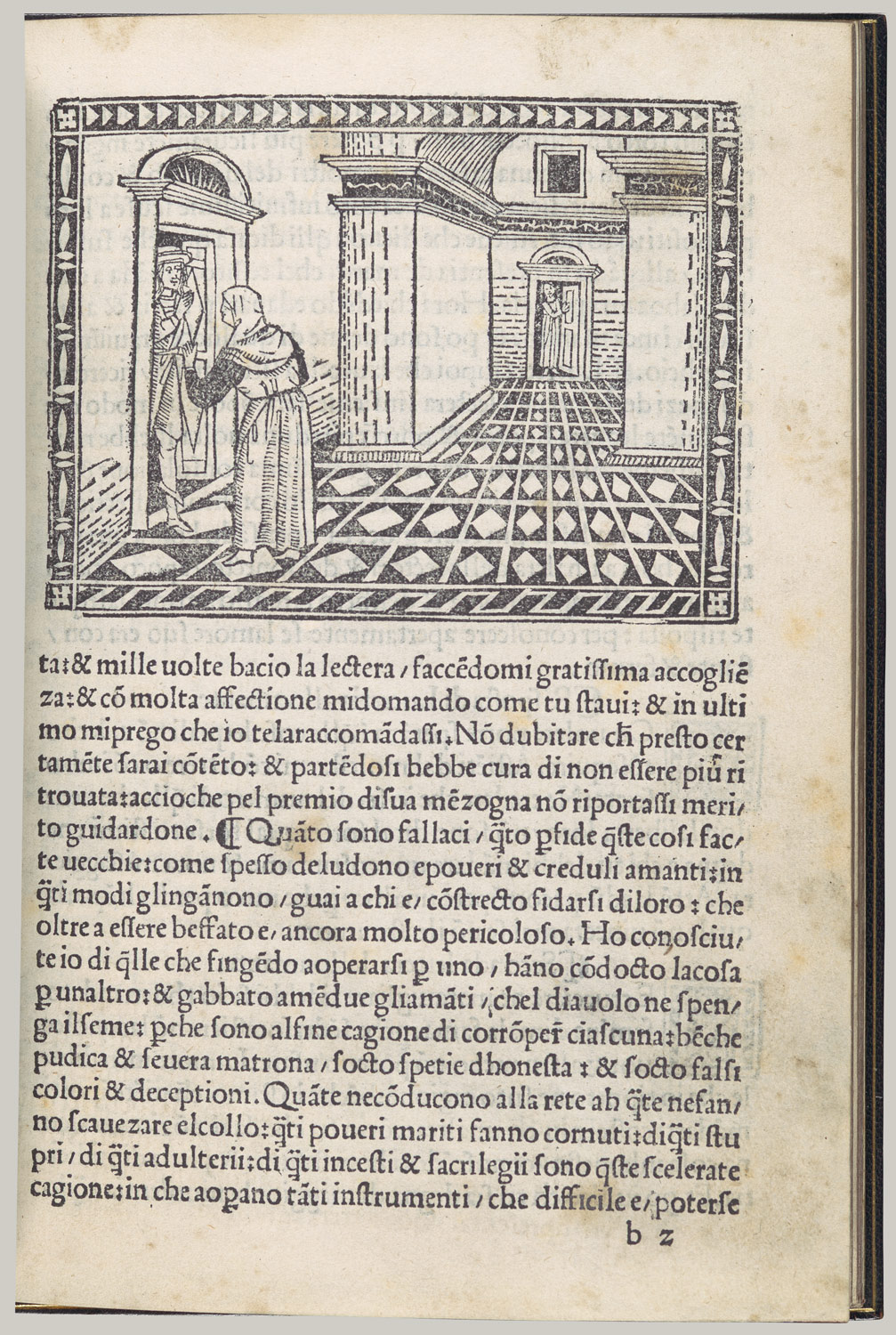
Euryalus delivers a love letter. 
The illustration breaks with standards of Medieval illumination. 
These were kept alive in Venice, but the Florentine printers 
developed this style because they were printing for
a larger, less wealthy public. (click the image to zoom)

No one exemplifies this change more distinctly than the author himself, albeit in unexpected ways. As a young Poet Laureate of Gaspar Schlick, the Chancellor of the Holy Roman Emperor (Sigismund of Austria...), Piccolomini seems to have embraced the ideals of the Renaissance. In the novel, one of Euryalus' last resort for gaining access to Lucretia, her husband's cousin Pandalus, points out that "Why, she is so changed by love, you would not think her the same person. Alas for piety, alas for grief! No one, until this happened, in all the city was chaster than she, no one more modest. It is indeed amazing that nature has given to love so much power over men’s thoughts." (i). Nature, as Fransesco de Sanctis points out, and in particular human nature, is now what is right (ii). Lucretia and Euryalus are clearly meant to be together, while the laws of society, which were the prevailing good in Medieval texts and the authority behind Lucretia's faltering marriage, is now what is wrong. While Dante viewed nature as evil and Medieval literature tended to view love as something granted by external, supernatural powers, Piccolomini places love in human nature. This Renaissance humanism which focuses on man and nature rather than religion and religious concepts saturates the novel and rules of society and honour which causes the tragic end to their relationship confirms this attitude.

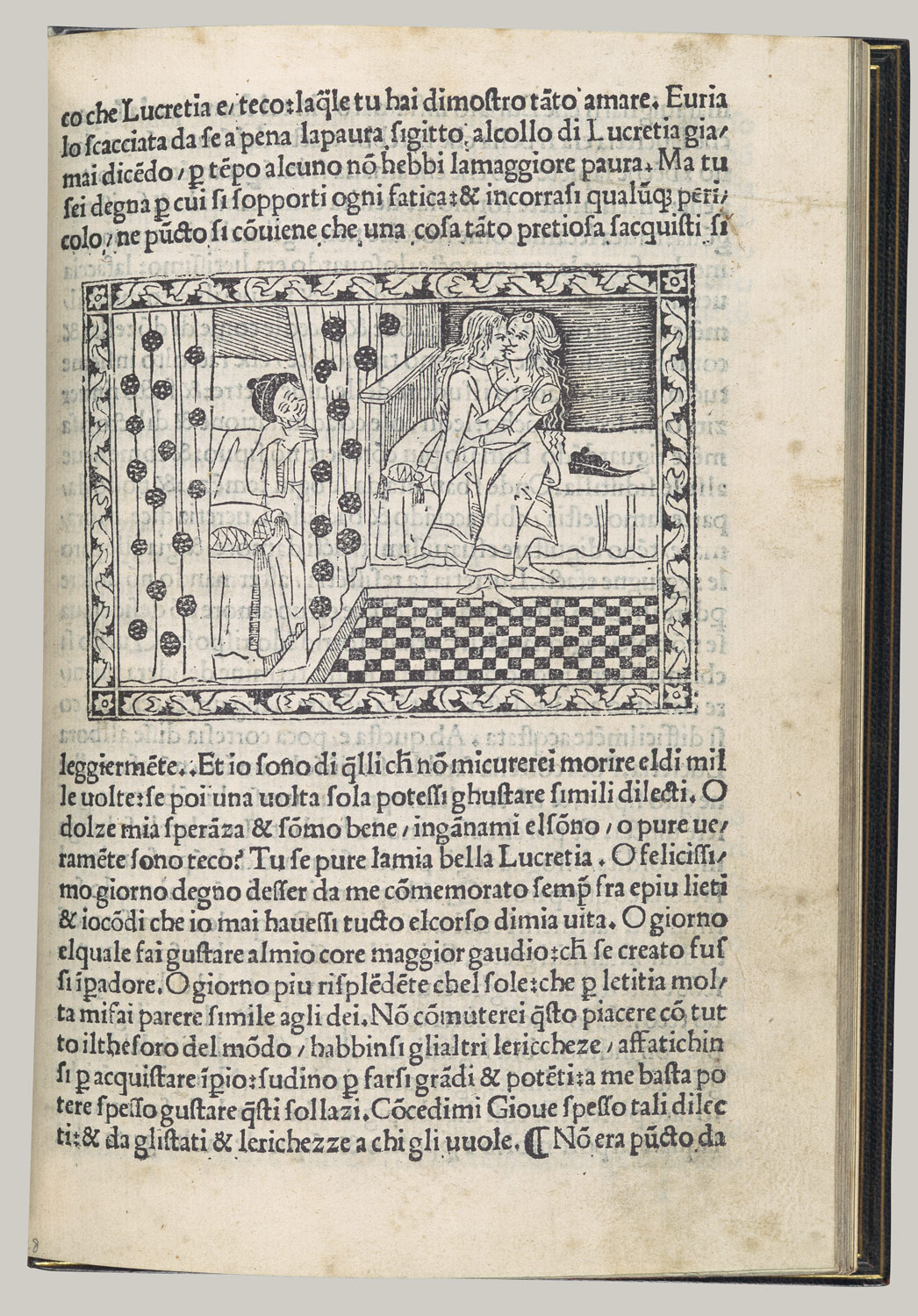
The lovers, in a fond embrace, are being warned by a servant that
Lucretia's husband is at the door. The print is probably 

re-used from some other work. (click  the image to zoom)

However, Piccolomini soon became Pope, resulting in a remarkable volte-face. As Pope Pius II, he famously stated "Aeneam rejicite, Pium suscipite!" ("Reject Aeneas, accept Pius!"). He distanced himself from the favourable descriptions of nature, and particularly that of Lucretia, as well as the success of his younger self, albeit unsuccessfully. In this sense, upon ascending to the top of the Holy See, Aeneas returned to pre-Renaissance sentiments, luckily for us, to no avail.

The erstwhile poet had already made his mark, providing posterity with lyrical and heartfelt descriptions of love and the experience of it. The English translation, introduced by the below paragraphs, makes for a delightful read and a story which remains as engaging and vivid today as it did almost six hundred years ago.

"
THE city of Siena, your native town and mine, did great honour to the Emperor Sigismund on his arrival, as is now well known; and a palace was made ready for him by the church of Saint Martha, on the road that leads to the narrow gate of sandstone. As Sigismund came hither, after the ceremonies, he met four married ladies, for birth and beauty, age and ornament, almost equal. All thought them goddesses rather than mortal women, and had they been only three, they might have seemed those whom Paris, we are told, saw in a dream. Now Sigismund, though advanced in years, was quick to passion; he took great pleasure in the company of women, and loved feminine caresses. Indeed he liked nothing better than the presence of great ladies. So when he saw these, he leaped from his horse, and they received him with outstretched hands. Then, turning to his companions, he said: ‘Have you ever seen women like these: For my part, I cannot say whether their faces are human or angelic. Surely they are from heaven.’ 
They cast down their eyes, and their modesty made them lovelier. For, as the blushes spread over their cheeks, their faces took the colour of Indian ivory stained with scarlet, or white lilies mixed with crimson roses. And chief among them all, shone the beauty of Lucretia. A young girl, barely twenty years of age, she came of the house of the Camilli, and was wife to Menelaus, a wealthy man, but quite unworthy that such a treasure should look after his home; deserving rather that his wife should deceive him or, as we say, give him horns. 
This lady was taller than the others. Her hair was long, the colour of beaten gold, and she wore it not hanging down her back, as maidens do, but bound up with gold and precious stones. Her lofty forehead, of good proportions, was without a wrinkle, and her arched eyebrows were dark and slender, with a due space between. Such was the splendour of her eyes that, like the sun, they dazzled all who looked on them; with such eyes she could kill whom she chose and, when she would, restore the dead to life. Her nose was straight in contour, evenly dividing her rosy cheeks, while nothing could be sweeter, nothing more pleasant to see than those cheeks which, when she laughed, broke in a little dimple on either side. And all who saw those dimples longed to kiss them. A small and well-shaped mouth, coral lips made to be bitten, straight little teeth, that shone like crystal, and between them, running to and fro, a tremulous tongue that uttered not speech, but sweetest harmonies. And how can I describe the beauty of her mind, the whiteness of her breast?
"

The remaider of the novel can be found by clicking here.

What do you think?

What is your opinion of the about-face of Pius the poet pope? He could have distanced himself from his earlier work either because of the requirements of office, because of old age and changed values but also for a number of other reasons. What do you think these might be and can you sympathise with his choices?

Also, an erotic novel more or less without sex: is that a contradiction in terms? Is it an erotic novel at all or would you classify it as something else? If so, what and why?


Finally, the personal aspect. Love, romance and sexuality are highly personal themes. Could this be the reason for the novel's popularity back then? What is your personal reaction to the novel? Who deserves your personal sympathy, Aeneas or Pius?

Comments on The Tale of Sir Bob are always welcome! 


Further reading: A quick but good introduction, a thorough analysis, a look at illustrations and a young literate's reactions

Sources: (i), (ii), Pic1, Pic2, Pic3, Pic4

Wednesday, 31 July 2013

Watson and Other Excitable Characters - Ejaculations in the Sherlock Holmes Canon

Hopefully, this heading did not make you ejaculate with shock! Recently, I watched the first episode of the QI J-season, and after a particularly entertaining passage on language and literature, I ejaculated with joy. However, I did so not in the most common modern sense of the word, but in the late 18th century sense. The e comes from latin out (of) while iaculor is to throw or hurl (like a javelin), so while re-ject means to throw/send something back and e-ject means to throw/send something out, an ejaculation used to be just any kind of outburst.

In this particular QI episode, the use of the word in the Sherlock Holmes canon was the object of much mirth. There are 23 ejaculations in the canon, all of which presumably intended to be verbal, but like imagining Frodo and Sam as lovers in The Lord of the Rings, once you've thought it you can't un-think it and you're scarred for life:


This is just a few, though, and so you might ask, "Surely, this must be something for someone with a blog on literature! Why not the lot?" And you did, to which I reply, "Enjoy!"

"
You must have observed the way in which he held his head and swung his cane. A steady, respectable, middle-aged man, too, on the face of him—all facts which led me to believe that he had been a sergeant.”
“Wonderful!” I ejaculated.
“Commonplace,” said Holmes
---
Simple as it was, there were several most instructive points about it.”
“Simple!” I ejaculated.
“Well, really, it can hardly be described as otherwise,” said Sherlock Holmes, smiling at my surprise.
---
“NOW, WATSON,” said Holmes, rubbing his hands, “we have half an hour to ourselves. Let us make good use of it. My case is, as I have told you, almost complete; but we must not err on the side of over-confidence. Simple as the case seems now, there may be something deeper underlying it.”
“Simple!” I ejaculated.
---
(Watson, in response to his soon-to-be fiancée)
It was selfish, no doubt, disloyal, wrong, but I could realize nothing save that the golden barrier was gone from between us.
“Thank God!” I ejaculated from my very heart.
She looked at me with a quick, questioning smile.

- A Study in Scarlet -

“What on earth does this mean?” I ejaculated after I had twice read over the extraordinary announcement.
Holmes chuckled and wriggled in his chair, as was his habit when in high spirits

- The Red-Headed League -

This observation of his had the natural effect of removing any traces of doubt which might have remained in the minds of the coroner's jury.”
“It was a confession,” I ejaculated 

- The Boscombe Valley Mystery -

While she was walking in this way down Swandam Lane, she suddenly heard an ejaculation or cry, and was struck cold to see her husband looking down at her and, as it seemed to her, beckoning to her from a second-floor window. The window was open, and she distinctly saw his face, which she describes as being terribly agitated. He waved his hands frantically to her, and then vanished from the window so suddenly that it seemed to her that he had been plucked back by some irresistible force from behind.
--- 
With these he constructed a sort of Eastern divan, upon which he perched himself cross-legged, with an ounce of shag tobacco and a box of matches laid out in front of him. In the dim light of the lamp I saw him sitting there, an old briar pipe between his lips, his eyes fixed vacantly upon the corner of the ceiling, the blue smoke curling up from him, silent, motionless, with the light shining upon his strong-set aquiline features. So he sat as I dropped off to sleep, and so he sat when a sudden ejaculation caused me to wake up, and I found the summer sun shining into the apartment. The pipe was still between his lips, the smoke still curled upward, and the room was full of a dense tobacco haze, but nothing remained of the heap of shag which I had seen upon the previous night.
“Awake, Watson?” he asked.
“Yes.”
“Game for a morning drive?”
“Certainly.”
“Then dress. No one is stirring yet, but I know where the stable-boy sleeps

- The Man with the Twisted Lip -

 Sherlock Holmes sat up with a whistle. “By Jove, Peterson!” said he, “this is treasure trove indeed. I suppose you know what you have got?”
“A diamond, sir? A precious stone. It cuts into glass as though it were putty.”
“It's more than a precious stone. It is the precious stone.”
“Not the Countess of Morcar's blue carbuncle!” I ejaculated.

- The Adventure of the Blue Carbuncle -

The ejaculation had been drawn from my companion by the fact that our door had been suddenly dashed open, and that a huge man had framed himself in the aperture. His costume was a peculiar mixture of the professional and of the agricultural, having a black top-hat, a long frock-coat, and a pair of high gaiters, with a hunting-crop swinging in his hand. 

- The Adventure of the Specled Band -

“What on earth has that to do with it?” I ejaculated.

- The Adventure of the Copper Beeches -

“The young imp cannot be found,” said Dr. Trevelyan; “the maid and the cook have just been searching for him.”
Holmes shrugged his shoulders.
“He has played a not unimportant part in this drama,” said he. “The three men having ascended the stairs, which they did on tiptoe, the elder man first, the younger man second, and the unknown man in the rear—”
“My dear Holmes!” I ejaculated.

- The Resident Patient -

“Surely the gate was open!” ejaculated Phelps.
“Yes, but I have a peculiar taste in these matters. I chose the place where the three fir-trees stand, and behind their screen I got over without the least chance of any one in the house being able to see me. I crouched down among the bushes on the other side, and crawled from one to the other—witness the disreputable state of my trouser knees—until I had reached the clump of rhododendrons just opposite to your bedroom window. There I squatted down and awaited developments.
“The blind was not down in your room, and I could see Miss Harrison sitting there reading by the table. It was quarter-past ten when she closed her book, fastened the shutters, and retired.
“I heard her shut the door, and felt quite sure that she had turned the key in the lock.”
“The key!” ejaculated Phelps 
--- 
(and finally)
A moment later the servant's door was opened, and Mr. Joseph Harrison stepped out into the moonlight.”
“Joseph!” ejaculated Phelps

- The Naval Treaty -

Once or twice it seemed to me that I had seen the same figure before, and I especially noticed two men who appeared to be sheltering themselves from the wind in the doorway of a house some distance up the street. I tried to draw my companion's attention to them, but he gave a little ejaculation of impatience and continued to stare into the street.

- The Adventure of the Empty House – see my earlier post featuring this short story!

As Holmes turned up the lamp the light fell upon a card on the table. He glanced at it, and then, with an ejaculation of disgust, threw it on the floor. I picked it up and read:—
CHARLES AUGUSTUS MILVERTON, 
Appledore Towers, 
Hampstead. 
Agent. 
“Who is he?” I asked.
“The worst man in London,” Holmes answered

- The Adventure of Charles Augustus Milverton -

Amid the droning of the wind there had come the stamping of a horse's hoofs and the long grind of a wheel as it rasped against the kerb. The cab which I had seen had pulled up at our door.
“What can he want?” I ejaculated, as a man stepped out of it.
“Want! He wants us. And we, my poor Watson, want overcoats and cravats and galoshes, and every aid that man ever invented
---
Tut-tut! Well, then, these tracks upon the grass, were they coming or going?”
“It was impossible to say. There was never any outline.”
“A large foot or a small?”
“You could not distinguish.”
Holmes gave an ejaculation of impatience.

- The Adventure of the Golden Pince-Nez -

This brought his hand within a few inches of the broken end of the rope, but it was not this so much as the bracket itself which seemed to engage his attention. Finally he sprang down with an ejaculation of satisfaction.
“It's all right, Watson,” said he.

- The Adventure of the Abbey Grange -

My visit was specially made to the good Mr. Ames, with whom I exchanged some amiabilities, which culminated in his allowing me, without reference to anyone else, to sit alone for a time in the study.”
“What! With that?” I ejaculated.
“No, no, everything is now in order. You gave permission for that, Mr. Mac, as I am informed. The room was in its normal state, and in it I passed an instructive quarter of an hour.”

- The Valley of Fear - 

In the bedroom he made a rapid cast around and ended by throwing open the window, which appeared to give him some fresh cause for excitement, for he leaned out of it with loud ejaculations of interest and delight.

- The Adventure of the Devil’s Foot - 

(Holmes misses Watson…)
And here it is that I miss my Watson. By cunning questions and ejaculations of wonder he could elevate my simple art, which is but systematized common sense, into a prodigy.

- The Blanched Soldier -

"

What do you think?

Once more with the etymology! Is the fact that the predominant meaning of words change, sometimes with comic results, the most appealing part of language, or is it something else? According to Queer  and Feminist Theory, a lot of literature can be read from a new angle, as with Lord of the Rings and now clearly the Holmes canon. Have you read anything lately where a different understanding of the genders and gender roles alters your understanding of the text?

Comments on The Tale of Sir Bob are always welcome! 


Sources: As given

Tuesday, 23 July 2013

Kurt Vonnegut's Backwards Movie


I am a slow reader, but Kurt Vonnegut's A Man Without a Country is to date the only book I have read all in a day. Kurt Vonnegut's innocent and quaintly humorous tone betrays a wit as sharp and piercing as an antibiotic syringe and this kept me rapt for an entire day. Expectations were therefore high before reading Vonnegut's most acclaimed novel, Slaugherhouse Five.

The novel figures on Modern Library and Time Magazine's lists of the 100 most significant English-language novels and the American Library Association's list of the 100 most frequently challenged books 1990-1999 (i.e. books requested for withdrawal from libraries). It is also known as one of the great anti-war novels, as it follows the protagonist Billy Pilgrim's experience of the Second World War, the bombing of Dresden and their results for Billy's subsequent civilian life. Vonnegut, who experienced the Dresden bombing, created this compelling argument against war halfway through his semi-autobiographic novel. The protagonist, many years after the war has become somewhat peculiar. He can't sleep, and goes into the kitchen.

"

Billy looked at the clock on the gas stove. He had an hour to kill before the saucer came. He went into the living room, swinging the bottle like a dinner bell, turned on the television. He came slightly unstuck in time, saw the late movie backwards, then forwards again. It was a movie about American bombers in the Second World War and the gallant men who flew them. Seen backwards by Billy, the story went like this:

American planes, full of holes and wounded men and corpses took off backwards from an airfield in England. Over France a few German fighter planes flew at them backwards, sucked bullets and shell fragments from some of the planes and crewmen. They did the same for wrecked American bombers on the ground, and those planes flew up backwards to join the formation.

The formation flew backwards over a German city that was in flames. The bombers opened their bomb bay doors, exerted a miraculous magnetism which shrunk the fires, gathered them into cylindrical steel containers, and lifted the containers into the bellies of the planes. The containers were stored neatly in racks. The Germans below had miraculous devices of their own, which were long steel tubes. They used them to suck more fragments from the crewmen and planes. But there were still a few wounded Americans, though, and some of the bombers were in bad repair. Over France, though, German fighters came up again, made everything and everybody as good as new.

When the bombers got back to their base, the steel cylinders were taken from the racks and shipped back to the United States of America, where factories were operating night and day, dismantling the cylinders, separating the dangerous contents into minerals. Touchingly, it was mainly women who did this work. The minerals were then shipped to specialists in remote areas. It was their business to put them into the ground., to hide them cleverly, so they would never hurt anybody ever again.

The American fliers turned in their uniforms, became high school kids. And Hitler turned into a baby, Billy Pilgrim supposed. That wasn't in the movie. Billy was extrapolating. Everybody turned into a baby, and all humanity, without exception, conspired biologically to produce two perfect people named Adam and Eve, he supposed.

"

If the significance of this passage eludes you, have no fear. The below illustration, accompanied by Kurt Vonnegut's reading of the passage succincly explains how contrary and illogical war is.


What do you think?

Do you think Vonnegut makes a compelling argument with this passage, or could it be read otherwise? Assuming it communicates an anti-war message, you agree with him and the way he presents it? Vonnegut is known for using short sentences meant for high reading speed rather than contemplation. Do you think this is a fitting style for discussing a topic as deep as war? Did the segment make you want to read more from Vonnegut?

Comments on The Tale of Sir Bob are always welcome! 

Sources: Vonnegut, Kurt: Slaugherhouse 5, London 2000, 60-61, pic, film, as given